
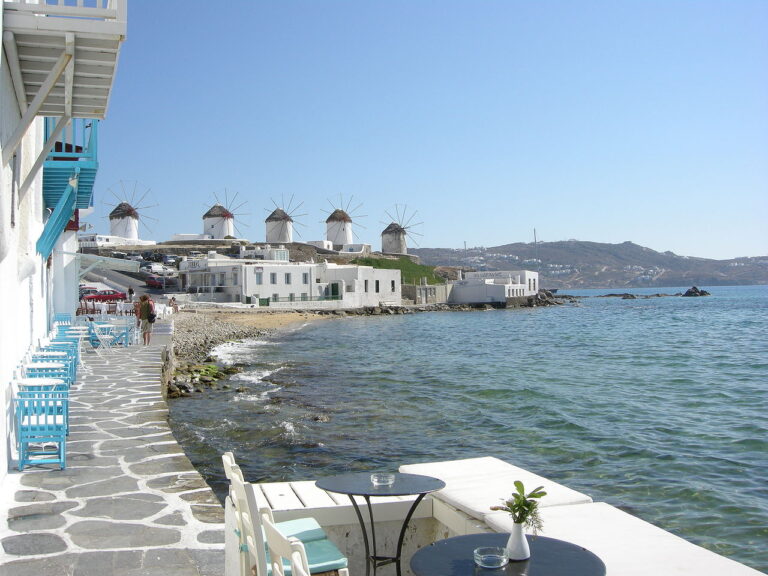
Over the past decade, Mykonos has undergone a significant transformation, evolving from a popular seasonal destination into a globally recognized premium tourism hub. This shift has not been driven by demand alone, but by the continuous development of infrastructure, services, and overall experience design.
Luxury tourism in Mykonos is no longer defined solely by accommodation and location. It is increasingly shaped by how efficiently visitors can access, navigate, and engage with the destination. From high-end villas and curated experiences to the systems that support movement across the island, every element contributes to a more structured and elevated offering.
Within this context, professional mobility has emerged as a critical component. The ability to manage transportation in a consistent and organized way supports not only convenience, but also the scalability of high-end tourism.
As Mykonos moves into 2026, the evolution of luxury infrastructure and mobility services reflects a broader shift in the tourism model — one that prioritizes coordination, efficiency, and the seamless integration of experience across all touchpoints.
You may also be interested in: Corporate Logistics: Managing Executive Transportation for Events in Mykonos
The transformation of Mykonos into a premium destination
The rise of Mykonos as a premium destination has been gradual, shaped by both international demand and targeted investment across the tourism ecosystem.
Initially recognized for its lifestyle appeal and seasonal popularity, the island has steadily repositioned itself within the global luxury travel market. This transition has been supported by the development of high-end accommodations, curated experiences, and a growing network of premium services.
At the same time, the profile of visitors has evolved. High-spending travelers, private groups, and international clientele now form a significant part of the market, bringing different expectations in terms of quality, consistency, and overall experience.
This shift has influenced how the destination operates. The focus is no longer limited to attracting visitors, but to managing the experience at a higher level. Infrastructure, service integration, and operational efficiency have become key components of this transformation.
As a result, Mykonos is no longer positioned solely as a lifestyle destination. It has become part of a broader premium tourism landscape, where the quality of execution across all elements defines its competitive standing.
You may also be interested in: What is the Best Way to Get Around Mykonos? (2026 Expert Review)
Investment in luxury infrastructure and services
The evolution of Mykonos into a premium destination has been supported by continuous investment across multiple areas of its tourism infrastructure. These investments extend beyond property development, shaping the broader ecosystem that defines the visitor experience.
High-end villa construction has played a central role. New properties are designed to meet international standards, combining architecture, privacy, and advanced amenities that cater to a more demanding clientele. At the same time, existing properties have been upgraded to remain competitive within the luxury segment.
Service infrastructure has developed alongside real estate. Concierge services, event planning, and curated experiences have expanded, creating a more structured and comprehensive offering for visitors.
Mobility has also become a focus of investment. As demand increases and movement across the island becomes more frequent, the need for organized transportation solutions has grown. This has led to the development of more professionalized mobility services that can support high-volume, high-expectation travel.
These investments reflect a broader shift. Mykonos is not only expanding its capacity, but also refining how services are delivered. The goal is not simply growth, but the ability to sustain a high-level experience at scale.
You may also be interested in: High-Net-Worth Mobility: Why Time Management is the ultimate luxury on the island
The role of mobility in supporting tourism growth
As Mykonos continues to expand its position within the premium tourism market, mobility has become a critical component of its overall infrastructure. Growth in visitor numbers and service offerings has increased the need for efficient and well-coordinated movement across the island.
Mobility supports access. High-end accommodations, beach clubs, restaurants, and private venues are distributed across different areas, requiring a system that can connect them effectively. Without this connectivity, the expansion of luxury offerings would be difficult to sustain.
At the same time, mobility supports scalability. As demand rises, the ability to move visitors efficiently becomes essential for maintaining service standards. Delays, congestion, and fragmented transportation systems can limit how smoothly the destination operates.
Professionalization within the mobility sector has therefore increased. More structured transportation services are emerging to meet the expectations of a market that values consistency and reliability.
This development reflects a broader reality. Tourism growth is not only a function of attracting visitors, but of managing their movement once they arrive. In this sense, mobility operates as a foundational layer that enables the entire tourism ecosystem to function effectively.
You may also be interested in: How to Get from Mykonos Airport to Your Villa: A Complete Arrival Guide (2026)
Rising expectations in high-end travel
As Mykonos strengthens its position in the global luxury market, expectations among high-end travelers continue to evolve. The focus has shifted from isolated elements of luxury to the overall quality and consistency of the experience.
Premium travelers now prioritize efficiency alongside exclusivity. Access to high-end locations is no longer sufficient on its own. The way these experiences are connected and delivered plays an equally important role.
Consistency has become a key expectation. Visitors expect the same level of quality across accommodation, services, and mobility. Any variation between these elements can affect the perception of the destination as a whole.
Time management is also increasingly important. High-end travel is structured around curated experiences, reservations, and limited availability. Delays or inefficiencies in movement can impact the overall flow of the stay.
In response, service providers across the island are adapting. There is a growing emphasis on coordination, integration, and reliability, reflecting a broader shift toward a more organized and experience-driven tourism model.
This evolution highlights a fundamental change. Luxury is no longer defined by individual offerings, but by how effectively they are combined into a seamless and well-managed experience.
You may also be interested in: Η αγορά των VIP μεταφορών στα ελληνικά νησιά και η περίπτωση της Μυκόνου
The connection between infrastructure and experience
In a destination such as Mykonos, infrastructure is no longer limited to physical development. It extends to the systems and services that shape how visitors interact with the island.
Experience is built on connectivity. Accommodation, dining, entertainment, and mobility must operate as parts of a unified framework. When these elements are aligned, the destination functions smoothly, allowing visitors to move effortlessly between different points of interest.
Infrastructure supports this alignment. Beyond roads and buildings, it includes the organization of services, the coordination between providers, and the efficiency of movement across the island.
When infrastructure is well-developed, the experience becomes more predictable and consistent. Delays are minimized, transitions are smoother, and the overall flow of the visit improves.
Conversely, gaps in infrastructure can affect perception. Even high-quality individual services may feel disconnected if they are not supported by a cohesive system.
This relationship highlights an important shift. The quality of a destination is no longer defined solely by what it offers, but by how effectively those offerings are integrated into a seamless and well-managed experience.
Διαβάστε επίσης: Γιατί η Accor αποσύρει τα σχέδιά της για ανάπτυξη στη Μύκονο
Professional mobility as part of the new tourism model
As Mykonos continues to evolve, mobility is becoming an integral part of the broader tourism model rather than a standalone service.
The shift toward a more structured and experience-driven market has increased the importance of coordination across all touchpoints. Transportation now plays a central role in connecting accommodation, activities, and services into a cohesive system.
Professional mobility supports this integration. By operating within a defined framework, it enables consistent and reliable movement across the island, aligning with the expectations of high-end travelers.
This development reflects a wider trend within the tourism industry. Destinations that aim to operate at a premium level are investing not only in physical infrastructure, but also in service systems that improve efficiency and scalability.
Within this context, mobility becomes a functional layer of the experience. It allows the destination to handle higher demand without compromising quality, while also supporting the seamless flow that modern travelers expect.
As a result, professional transportation services are increasingly positioned as part of the infrastructure that underpins luxury tourism, contributing to both operational performance and overall destination perception.
In this context, certain providers have begun to position themselves as part of this emerging infrastructure layer. Services such as Mykonos Must, a premium transfer service in Mykonos, reflect this shift toward more structured and professionalized mobility solutions that support the broader tourism ecosystem.
Διαβάστε επίσης: ARTION: Ανακοινώνει νέα θυγατρική εταιρεία στη Μύκονο
Challenges in scaling luxury tourism in Mykonos
As Mykonos continues to grow as a premium destination, scaling the tourism model while maintaining high standards presents a series of structural challenges.
One of the primary issues is capacity management. Increased demand places pressure on accommodation, services, and infrastructure, requiring careful coordination to avoid saturation and service inconsistencies.
Infrastructure limitations also play a role. While investment has expanded the island’s offerings, certain systems, particularly those related to mobility and access, must continuously adapt to support higher volumes without affecting the overall experience.
Maintaining consistency at scale is another key challenge. Delivering a uniform level of quality across a growing network of services requires alignment between multiple providers, each operating within a dynamic and fast-changing environment.
At the same time, expectations continue to rise. High-end travelers expect seamless execution regardless of demand levels, which increases the importance of structured systems and proactive planning.
Balancing growth with experience quality becomes essential. Expanding the market without compromising the perception of exclusivity and control requires a more integrated approach to tourism management.
These challenges highlight a critical point. Growth alone is not enough. The ability to sustain a high-level experience at scale is what ultimately defines the long-term success of a premium destination.
Where Mykonos is heading
As Mykonos moves toward the next phase of its development, the focus is expected to shift from expansion to optimization. The foundation of a premium destination has already been established. The challenge now lies in refining how the entire system operates.
Future growth will likely depend on integration. Connecting infrastructure, services, and mobility into a cohesive framework will be essential for maintaining consistency and supporting higher demand levels.
Technology and data-driven coordination are also expected to play a greater role. Managing movement, availability, and service delivery more efficiently will help reduce pressure on existing systems while improving the overall experience.
Sustainability will become increasingly relevant. Balancing tourism growth with environmental and operational limits will require a more strategic approach to development and resource management.
At the same time, the expectations of high-end travelers will continue to evolve. Personalization, efficiency, and seamless execution will remain central to how the destination is perceived.
In this context, Mykonos is moving toward a more mature tourism model. One that is not defined only by luxury offerings, but by the ability to deliver a consistent, well-managed, and scalable experience across all levels of the destination.